Now accepting projects — Q4 2026
02

Agentic Coding
custom enterprise applications

1$ekel build --service agentic-coding2→ ai-pair-programming: enabled3→ tests: 80%+ coverage4✓status: shipping
Not a Salesforce add-on. Full enterprise systems built from zero: employee consoles, customer portals, AI-enabled products, and data / API platforms. AI accelerates the build loop; engineering discipline stays intact.
Agentic Coding is not sloppy AI-written code. We use AI to accelerate the spec, test, implementation, and refactor loop, while CTA-level engineers own quality. Clients get maintainable software with a delivery cycle around 60% of the traditional path.

Typical Agentic Coding engagements

  • Internal consoles: employee management, reporting, approvals, HR / Finance tools
  • Customer portals: B2B self-service, order tracking, uploads, contract management
  • AI-enabled products: embedding search, RAG Q&A, contract review, custom LLM agents
  • Data / API platforms: integrations, ETL pipelines, warehouses, reporting APIs
  • Mobile / multi-device apps: iOS, Android, and Web with a shared backend
  • Salesforce-integrated apps: when custom software is a better fit than LWC
We choose proven, stable stacks: React / Next.js / Node.js / Postgres / Vercel / Supabase / OpenAI · Anthropic APIs. No hype-driven choices, no half-finished frameworks. Every technical decision has a reason.

What we do

  • Product / system specification with user research and wireframes
  • Architecture decisions: stack, deployment, security, cost model
  • Full-stack implementation: frontend, backend, database, integrations
  • Code review report signed off by a CTA
  • CI/CD and observability basics: logs, metrics, alerts
  • 2-3 week post-delivery bug-fix window plus monthly small-change allowance
DELIVERABLE 01
Complete application + documentation + tests + CI/CD
DELIVERABLE 02
Architecture Decision Records + code review report
DELIVERABLE 03
2-3 week bug-fix period + monthly small changes
ComparisonTraditional outsourcingEKel Agentic Coding
Need to prototype4-8 weeks1-2 weeks
Development cycle6-12 months2-4 months
Mid-project visibilityNo / black boxUsable demo every 2 weeks
Quality guardrails“It will be fine at go-live”Automated review + PMD scan + tests
Progress transparencyMonthly PowerPointReal staging environment, demo anytime
Handling changeChange request + requotePut it into the next sprint
// PRODUCTION DELIVERY ARCHITECTURE

Quality gates from intent to production.

AI accelerates specs, tests, and implementation; senior engineers own architecture, trade-offs, and final approval.

EKEL / ARCHITECTURE VIEWTRACEABLE · GOVERNED · OPERABLE
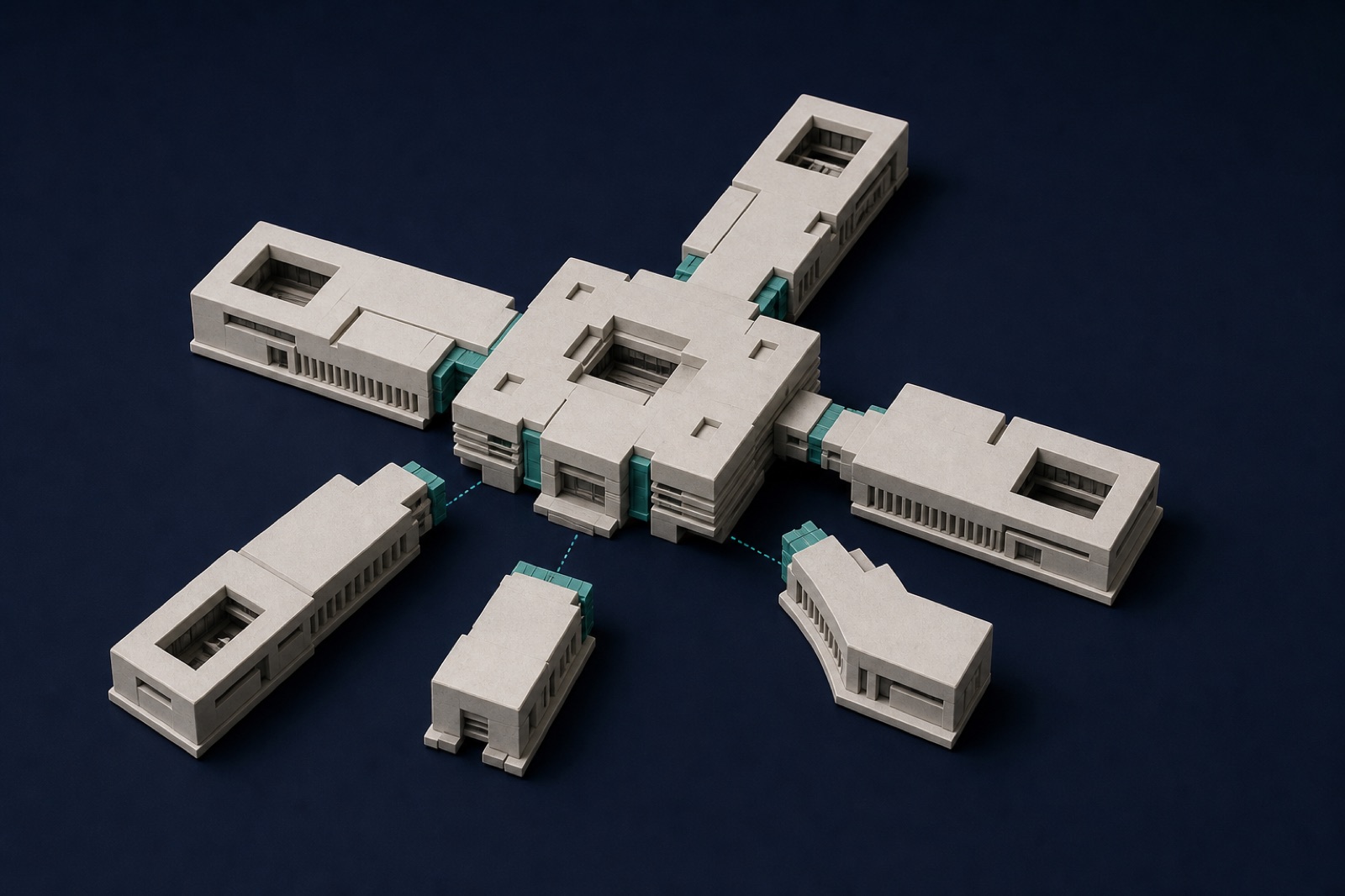
Modular application architecture expanding from a stable core
PHYSICAL SYSTEM REFERENCE
01
Automated testing
UNIT · E2E · REGRESSION
02
Security & code review
SAST · DEPENDENCIES · CTA
03
Docs & handover
ADR · RUNBOOK · OWNERSHIP
01 / INTENT
Process & product spec
JOURNEY · SCOPE · ACCEPTANCE
02 / DESIGN
Architecture & data model
ADR · API · SECURITY
03 / BUILD
AI-assisted build
CODE · TEST · REVIEW
04 / RUN
Operable production
CI/CD · LOGS · ALERTS
// SERVICE CATALOG · AGENTIC CODING

Replace legacy and small SaaS with AI-ready software you own

What people call "AI vibe coding" becomes, in our hands, agentic coding with engineering discipline: senior engineers own the architecture and AI accelerates every step. It fits small and mid-sized systems best — a fifteen-year-old Access or VB system, an old website nobody dares to touch, or a handful of per-seat SaaS tools where you use barely a fifth of the features.

legacy-rebuild · order systemREBUILDING
LEGACYREVERSE-ENGINEERMODERN · AI-READYORDERS.EXEFILE EDIT REPORTSAVEQUERYƒBusiness rulesIF credit > limit → HOLD▦Data dictionaryorders.cust_id → FK⇢Process flowsquote → order → invoiceAI-EXTRACTED · ENGINEER-REVIEWEDorders.appORDERSSLAAPIMCPAI-ready① Read the legacyVB6 · Access · ASP② Extract the specrules · schema · flows③ Rebuild, modernWeb · API · MCP
~60%
About 60% of a traditional timeline

AI speeds up spec, tests, build and refactoring; CTA-level engineers own quality.

100%
You own the code and data

Conventional TypeScript and cloud architecture — no AI black box, no platform lock-in.

Reverse
We read undocumented legacy

Vendor gone, docs lost, original developer left — AI rebuilds the full spec from source and database.

AI-ready
Ready for AI from day one

Clean APIs, permissions and audit trails, plus MCP endpoints, so AI agents can safely read and write your systems.

PHASE 01 · DISCOVERY

Assess & reverse-engineer

First, understand what you have: which systems to replace, which SaaS to cut, and which forgotten business rules hide inside the old system.

AC-D1Start here

Portfolio ReviewSYSTEM & SAAS PORTFOLIO REVIEW

Add up what small SaaS and legacy systems really cost you each year, and decide what to replace and what to keep.

  • Inventory every SaaS subscription and in-house system
  • Overlap, usage and per-seat cost analysis
  • Data lock-in and security-risk assessment
  • Build vs. renew vs. consolidate recommendations

For companies whose SaaS bills keep growing and who can't say which tools they really need.

Format
1–2 weeks · fixed price
Deliverable
Replacement priority list + 3-year TCO model
AC-D2AI-powered

Legacy Reverse EngineeringLEGACY REVERSE ENGINEERING

Let AI read the legacy system nobody dares to touch, and surface every business rule buried in the code.

  • Analyse source code, database schema, screens, reports and Excel macros
  • Typical targets: VB6, Delphi, classic ASP / old PHP, Access, Oracle Forms, COBOL
  • Extract business rules, a data dictionary and process flows
  • Flag hidden logic, edge cases and data-quality issues

For systems whose vendor is gone, documentation lost or original developer left — but the business still runs on them every day.

Format
2–4 weeks · by system size
Deliverable
A build-ready spec: business rules, data dictionary, process flows
PHASE 02 · BUILD

Rebuild & build

Rebuild on modern technology: keep the business logic and the habits people rely on; drop the outdated tech, the per-seat bills and the security risk.

AC-B1

Legacy ModernisationLEGACY MODERNISATION

No painful big-bang rewrite: old and new run in parallel and switch over in stages, without a day of downtime.

  • A web-based, cloud-hosted, API-first architecture
  • Data cleansing, migration and old-vs-new reconciliation
  • Parallel run and a staged cutover plan
  • Keeps the workflows people know, so the switch meets less resistance

For departments and SMEs still running Windows desktop apps, Access databases or ageing websites.

Format
Scope-dependent · typically 2–4 months
Deliverable
A live new system + migration report + docs
AC-B2

SaaS ReplacementSAAS REPLACEMENT

Replace per-seat SaaS you barely use with software that fits your process exactly — and belongs to you.

  • Common replacements: forms and approvals, scheduling and booking, inventory, ticketing, customer portals
  • Export and migrate history from the old SaaS
  • Designed around your process, not the tool's
  • Wired into your existing logins, notifications and reporting

For teams whose SaaS costs balloon with headcount, or whose tools never quite fit the process.

Format
4–8 weeks · by feature scope
Deliverable
Your own system + source code + deployment docs
AC-B3

Custom Enterprise SystemsCUSTOM ENTERPRISE SYSTEMS

Internal consoles, customer portals, mobile apps, data platforms — built from zero with no discount on engineering discipline.

  • Product spec and wireframes, with user research
  • Full-stack build: frontend, backend, database, integrations
  • CI/CD, automated tests and observability
  • A code review report signed off by a CTA

For businesses whose operations don't fit off-the-shelf tools, or where customisation cost and lock-in are too high.

Format
A usable demo every two weeks
Deliverable
Complete application + docs + tests + ADRs
AC-B4Built in

AI-ready by DesignAI-READY BY DESIGN

Every system we build is ready for AI agents to take on real work — the last mile from digital transformation to an AI-ready business.

  • A structured data model and complete APIs
  • MCP endpoints so agents like Claude and ChatGPT can access it safely
  • Fine-grained permissions and full audit trails — every AI action traceable
  • Built-in AI features: search, summaries, document Q&A

For organisations that want to be AI-ready but whose current systems can't yet expose data and permissions to AI.

Format
Included in every build
Deliverable
API docs + MCP endpoints + permission design
PHASE 03 · OPERATIONS

Run & evolve

After launch we keep it stable, secure and improving — no need to staff an IT team for one system.

AC-M1

Hosting & CareHOSTING & CARE

Cloud hosting, monitoring, backups and security patches — one monthly fee.

  • Cloud hosting and performance monitoring
  • Automated backups and disaster-recovery drills
  • Dependency and security updates
  • SLA incident handling

For businesses without an IT team, or tired of worrying about servers.

Format
Monthly
Deliverable
Monthly operations report
AC-M2

Continuous EvolutionCONTINUOUS EVOLUTION

The business changes and the system keeps up: a monthly change allowance plus AI features added step by step.

  • Monthly small-change allowance
  • Feature sprints with a demo every two weeks
  • AI agents and automation added in steps
  • 2–3 week bug-fix warranty after each delivery

For teams with a long list of features they still want after launch.

Format
Monthly or per sprint
Deliverable
Release notes + roadmap
// FULL DEMO · EKEL HR

Watch a real delivery: the system that replaced Swingvy

Three minutes through payroll, approvals, expense claims, and finance analytics. Built with Agentic Coding, shipped to three platforms in 4 weeks, and running our own operations daily.

FAQ

Agentic coding questions teams ask us.

What is Agentic Coding (AI-assisted development)?

A way of building software where senior engineers drive the architectural decisions and AI accelerates the code. It is not "let AI write the whole app" — humans own the design, trade-offs, and quality gate; AI collapses the delivery time and cost.

Is AI-written code actually reliable?

Yes, because what we ship is production-grade — with the test coverage, observability, and documentation of a traditional five-week build. Our two-week deliveries are real production systems, not corner-cut MVPs.

After handover, can our own engineers maintain it?

Yes. The output is conventional Salesforce and TypeScript code with documentation your team can read and modify — no AI dependency or black box. You own the source, the docs, and the architectural decisions.

Can you rebuild a legacy system when the vendor is gone and there is no documentation?

Yes — that is exactly what legacy reverse engineering is for. AI analyses the source code, database structure, screens and reports to extract the business rules, data dictionary and process flows; senior engineers review them and they become the spec for the new system. Old and new then run in parallel and switch over in stages, so the business never stops.

Is replacing small SaaS tools with a custom system really cheaper?

Not always, which is why we start with a review. When SaaS is priced per seat, you use a fraction of it, or your process keeps bending around the tool, owning the system is often cheaper over its lifetime — and the code and data are yours. We show you a three-year TCO model. If the off-the-shelf tool already fits, we'll tell you to keep it.

When should we choose Agentic Coding over off-the-shelf SaaS?

When the off-the-shelf option doesn't fit how you actually operate, or the customisation cost and lock-in risk are too high. In a consult we'll judge honestly whether building, buying SaaS, or a hybrid is right — and if off-the-shelf is enough, we'll say so.

// NEXT STEP

Custom application in mind? Let’s scope it together.

Thirty minutes — share the functional outline and operating pain. A CTA will judge whether Agentic Coding, off-the-shelf SaaS, or a hybrid is the right call.

We use cookies

We use strictly necessary cookies to run this site, plus optional analytics cookies (Google Analytics) to understand how visitors use it. See our Cookie Policy and Privacy Policy.