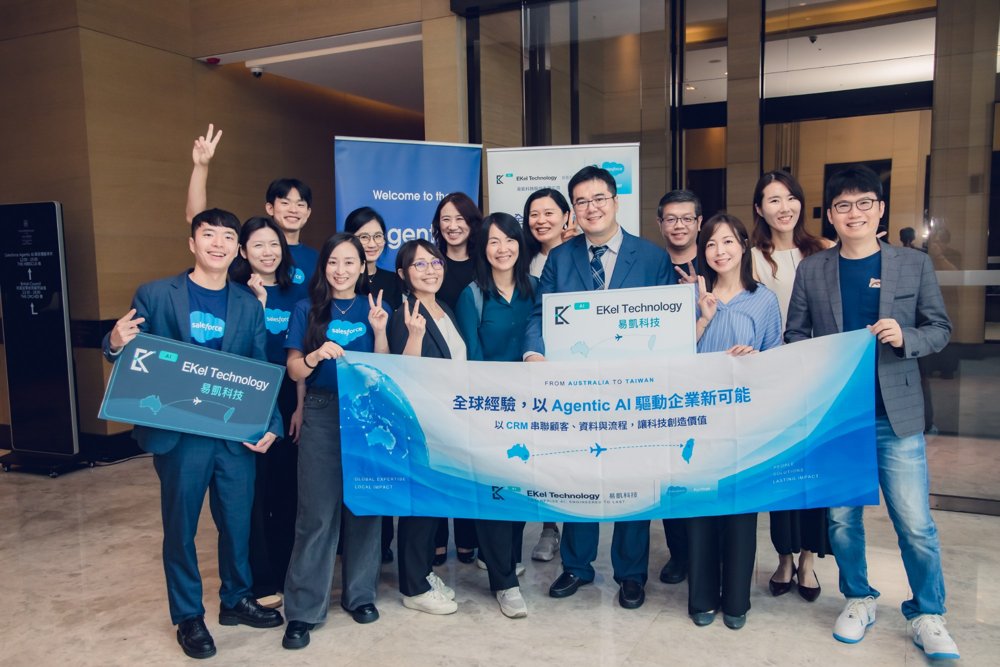
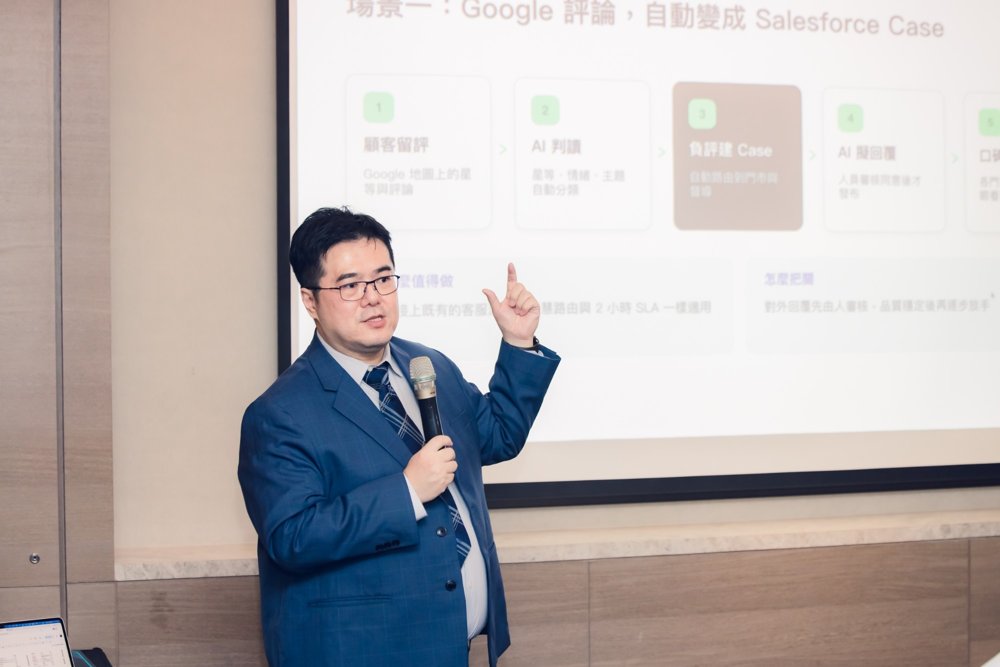
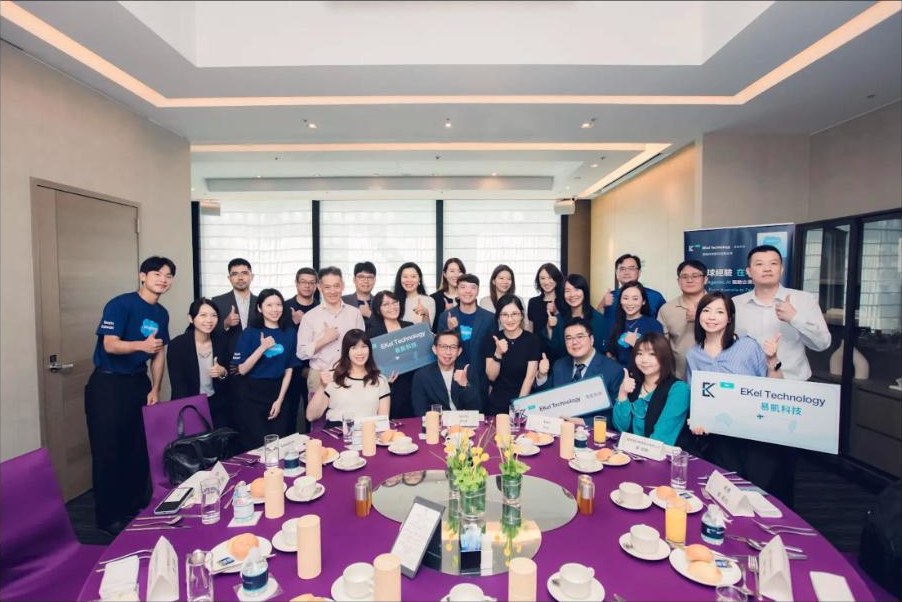
A luncheon for retail and consumer-goods leaders
On 21 October, EKel Technology and Salesforce hosted retail, restaurant and consumer-goods executives for a closed-door lunch on one question: how do AI agents move from concept into day-to-day operations?
Q Burger: from email, phone calls and LINE to one platform
Q Burger runs a franchise network. Before the project, franchise processes ran on email, issues were chased by phone and LINE, and field data never reached head office.
EKel built on Consumer Goods Cloud (Enhanced) together with Sales, Service and Experience Cloud, in three phases over eighteen months: franchise recruitment, store openings and contracts first; then customer service, equipment repairs and store audits; then purchasing, fixed assets and warranties. The final phase went live on 15 June 2026. Today 500+ users, 12+ core modules and 966 contracts run on the platform. It is Taiwan's first Consumer Goods Cloud (Enhanced) implementation.
Before AI, connect the data
"Before AI, connect the data flow," Eric said. When data is scattered across POS, ERP, websites and review sites, AI can only guess. Once process and data share one platform, AI can act: triaging Google reviews into service cases, reading contracts and flagging renewals, and Agentforce agents for customers, franchisees and staff, with people approving anything that goes out.
Three takeaways
- Connect the data before talking about AI.
- Start with one high-return use case, such as reviews or contracts.
- Keep a human in the loop, then let go step by step.
About EKel Technology
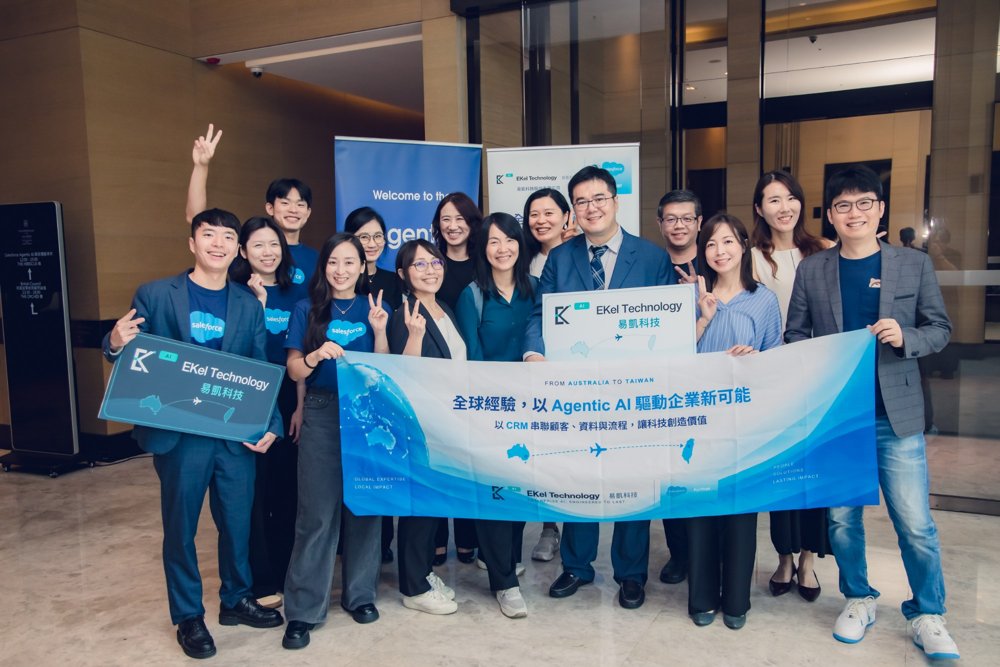
EKel Technology is a Taipei-based Salesforce consulting partner led by a Salesforce Certified Technical Architect (CTA), serving Taiwan, Hong Kong and Singapore. Book a 30-minute consultation or read the full Q Burger case.
Related Reading
Introducing Orchard: from business intent to accountable AI delivery
Orchard connects requirements, design, AI execution, review, acceptance, and release. Starting with Salesforce agentic delivery, its broader direction brings the same discipline to monday.com and custom business applications.
After the Vibe-Coding Hangover: Why Most AI-Built Apps Die Before Go-Live
Vibe coding only took off last year, and the halo barely lasted twelve months. Over the past six months the market's mood has shifted from weekend-app wonder to a harder reality: demos everywhere, systems that survive go-live almost nowhere. This piece breaks down the eight walls between demo and production, why code that "looks right" is the most dangerous kind, and how professional teams using the same AI ship systems that run daily operations — including how we replaced Swingvy in four weeks, full video included.
DIY With AI, Or Hire Consultants? The 18-Month Cost Sheet for Custom Enterprise Apps
AI makes "just build it ourselves" look trivial: two internal engineers, Cursor plus Claude Code, a working demo by week 4. But enterprises don't need demos — they need systems that employees still want to use 18 months later, that audits clear, that don't blow up at the next compliance check. This essay walks the timeline of the DIY-with-AI path — what it looks like at week 4, month 6, month 12, and month 18 — and why the gap between expert and non-expert AI use is the 5–10× output multiplier that decides which path you actually walk.
Want to discuss your specific scenario?
A 30-minute conversation with a CTA. Based on your situation, we will answer directly: worth doing, too early, or not our fit.
We use cookies
We use strictly necessary cookies to run this site, plus optional analytics cookies (Google Analytics) to understand how visitors use it. See our Cookie Policy and Privacy Policy.

This is an AI virtual character, not a real person. The call uses your microphone (never your camera); audio and captions are used only for this live conversation and are not saved by us. Privacy policy
AI answers may contain errors. No personal data is needed to start chatting.